Accumulator Insurance Meets Cashback: Reshaping Bonus Stacking in Digital Loyalty Programs
Casey Coleman · Jul 1, 2026

Accumulator Insurance Meets Cashback: Reshaping Bonus Stacking in Digital Loyalty Programs
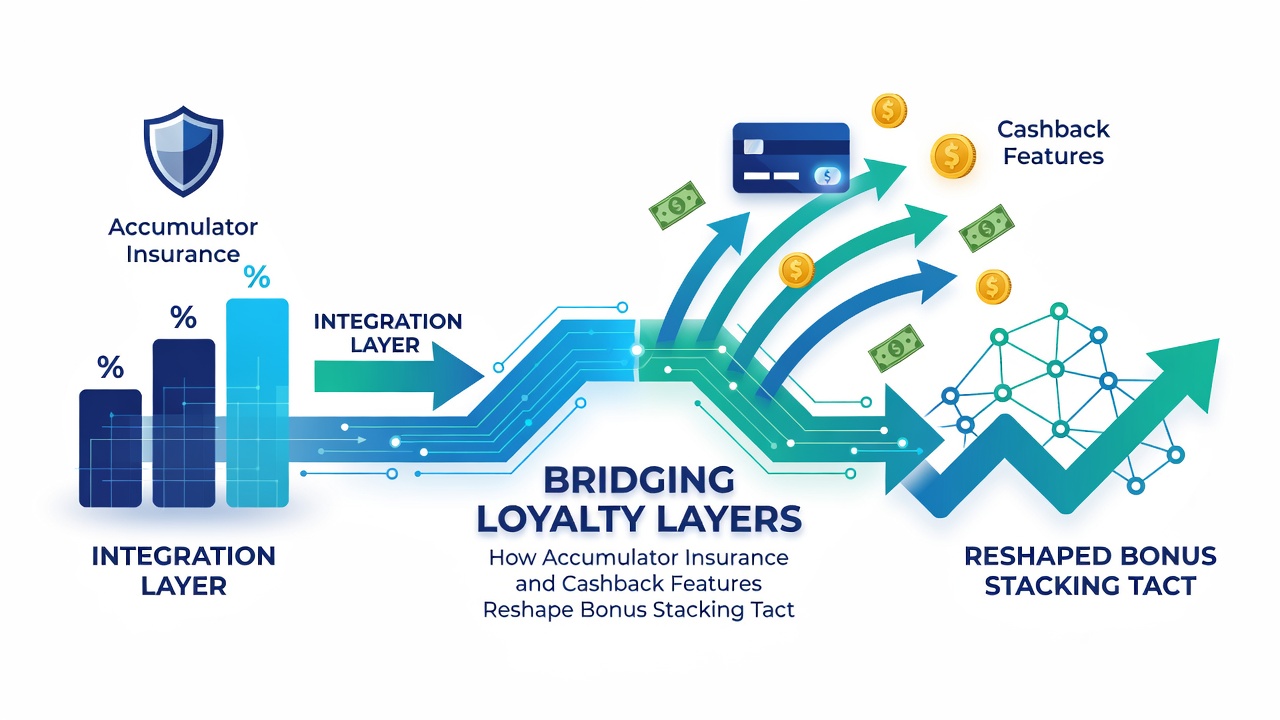
Digital platforms have integrated accumulator insurance and cashback features into their loyalty structures, and these tools now allow users to combine promotions across separate accounts in ways that earlier systems did not support. Accumulator insurance refunds stakes on failed multi-leg bets when at least one selection loses, while cashback returns a percentage of net losses over defined periods, and both elements create new pathways for bonus stacking that cross from sports betting into casino sections and back again.
Mechanics of Accumulator Insurance in Practice
Operators apply accumulator insurance by attaching refund conditions to bets that include four or more selections, and the refund often arrives as a free bet or account credit once the qualifying loss occurs. Data from regulatory filings show that platforms in multiple jurisdictions introduced tiered insurance levels during 2025, with higher refund percentages tied to larger stake thresholds or longer accumulator chains. Those who monitor these programs note that insurance triggers frequently reset after each qualifying period, which encourages repeated stacking attempts across different operators rather than within a single site.
Cashback Structures and Their Role in Layering
Cashback programs calculate returns on weekly or monthly net losses and deposit the amounts directly into user accounts as playable funds or withdrawable balances. Several platforms have aligned cashback percentages with loyalty tiers, so higher activity levels unlock improved rates that apply across both sports and gaming verticals. Observers have recorded cases where users combined cashback credits from one platform with insured accumulator refunds from another, creating layered positions that extend playtime without additional deposits.
Cross-Platform Stacking Patterns Observed in Mid-2026
By July 2026, tracking reports indicated that users increasingly moved between apps to activate insurance on sports accumulators and then applied cashback earnings to casino promotions within the same week. This sequence works because insurance refunds often carry fewer wagering requirements than standard welcome bonuses, while cashback funds sometimes bypass certain playthrough rules when used on specific game categories. Researchers at institutions studying digital wagering behavior documented these patterns through anonymized transaction data, revealing that stacking cycles shortened from an average of nine days in early 2025 to roughly five days by summer 2026.
Regulatory Context Across Regions
Authorities outside the United Kingdom have issued guidance on how insurance and cashback features interact with responsible gambling tools. The National Council on Problem Gambling in the United States published summaries noting that refund mechanisms can extend session lengths when paired with cashback, prompting some state regulators to require clearer disclosure of combined promotion terms. In Australia, the Australian Gambling Research Centre released findings that examined how loyalty layer combinations affect player expenditure patterns, and those reports highlighted the need for operators to track aggregate refunds across verticals rather than treating each feature in isolation.
Technical Integration and User Interface Changes
Platform developers have embedded insurance toggles directly into bet-slip interfaces, allowing users to activate coverage with a single click before confirming multi-leg wagers. Cashback dashboards now display projected returns in real time based on current loss totals, and some systems push notifications when stacking opportunities align across linked accounts. These interface adjustments reduce friction in moving funds between features, which in turn supports more frequent transitions from sports products to casino environments within the same session.
Future Adjustments Expected by Operators
Industry analysts anticipate further refinements to insurance eligibility windows and cashback calculation formulas as platforms respond to usage data collected through 2026. Adjustments may include daily caps on refund amounts or category-specific cashback rates that differentiate between accumulator bets and slot play. Such changes would alter stacking sequences yet again, because users would need to recalculate the optimal order of activating insurance and cashback to maintain the same net position across multiple platforms.
Conclusion
Accumulator insurance and cashback features continue to evolve as core components of digital loyalty programs, and their combined presence has produced measurable shifts in how promotions are sequenced across platforms. Regulatory bodies in various regions have begun documenting these interactions, while operators adjust interface designs and terms to manage the resulting activity patterns. The outcome remains a dynamic environment where stacking tactics adapt quickly to each new feature release.