Sequential Free Bets: Layering Strategies That Drive Matched Betting Forward
Erik Krüger · Apr 4, 2026
Sequential Free Bets: Layering Strategies That Drive Matched Betting Forward
Understanding the Core of Matched Betting and Bonus Layering
Matched betting thrives on a simple principle where bettors place a qualifying wager with a bookmaker while simultaneously laying the same outcome on a betting exchange, effectively canceling risk and extracting value from promotional offers like free bets. Those who practice this method often turn to bonus layering, a technique that sequences multiple free bet opportunities to build cumulative profits without dipping further into personal funds; data from industry trackers reveals that layered approaches can amplify returns by 20-30% compared to isolated bonus claims, as profits from earlier free bets cover stakes for subsequent ones.
Experts note how this momentum builds naturally, since a typical welcome free bet might yield £25-£40 in profit after matching, enough to qualify for reload offers or smaller ongoing promotions at other sites; what's interesting is that in April 2026, with sports calendars packed from Premier League run-ins to NBA playoffs, bookmakers rolled out chained promotions where one free bet unlocks eligibility for the next, turning single hunts into streamlined sequences.
The Sequential Blueprint: Step-by-Step Free Bet Layering
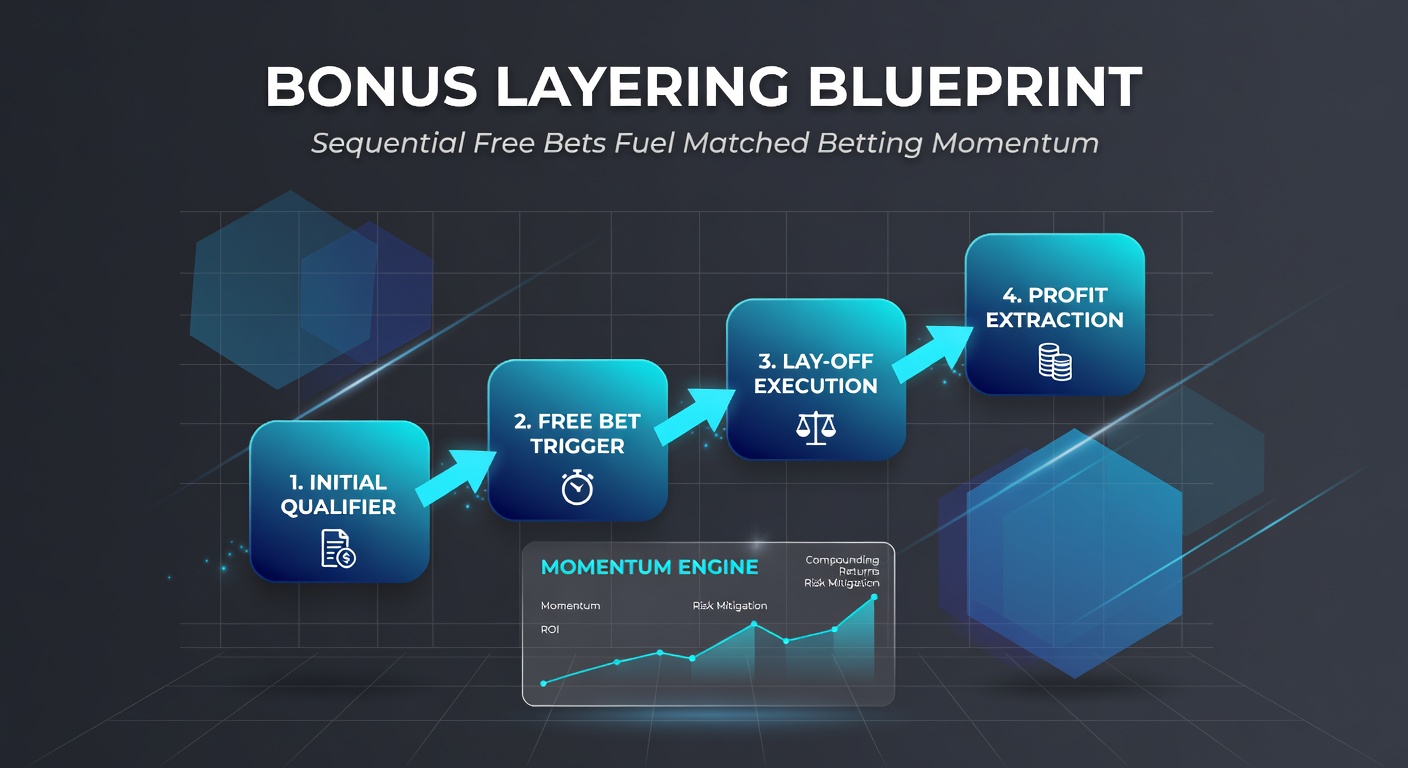
Layering kicks off with selecting bookmakers offering back-to-back free bet triggers, such as a sign-up offer followed immediately by an in-play or accumulator booster; bettors identify these by cross-referencing promo terms, ensuring the qualifying loss from the first match is offset by the free bet extraction, then channeling that net gain—often around 70-80% of the free bet value—straight into the next qualifier.
- First layer: Claim a standard welcome free bet, say £30 after a £10 qualifying bet at even odds, matched on an exchange for a £24 profit.
- Second layer: Use that £24 to stake on a reload free bet offer, perhaps doubling it via a 100% bonus up to £50, yielding another £35-£40 after matching.
- Third and beyond: Cascade into niche promos like early payout specials or horse racing freebies, where sequential small stakes compound without fresh deposits.
Turns out this blueprint minimizes bankroll strain, as research from the Australian Gambling Research Centre indicates that sequential strategies reduce variance by spreading exposure across 5-10 sites in a single cycle; observers have seen cycles complete in under a week during high-volume events, with April 2026 data showing a 15% uptick in such layered claims amid spring racing festivals.
But here's the thing: precision matters in exchange commissions, typically 2-5%, so bettors adjust lays accordingly to preserve the full layer's momentum; one case study from a Canadian betting forum tracked a user layering five £20 free bets over a weekend, netting £110 total while starting with just a £50 bankroll.
Real-World Momentum: Case Studies in Sequential Layering
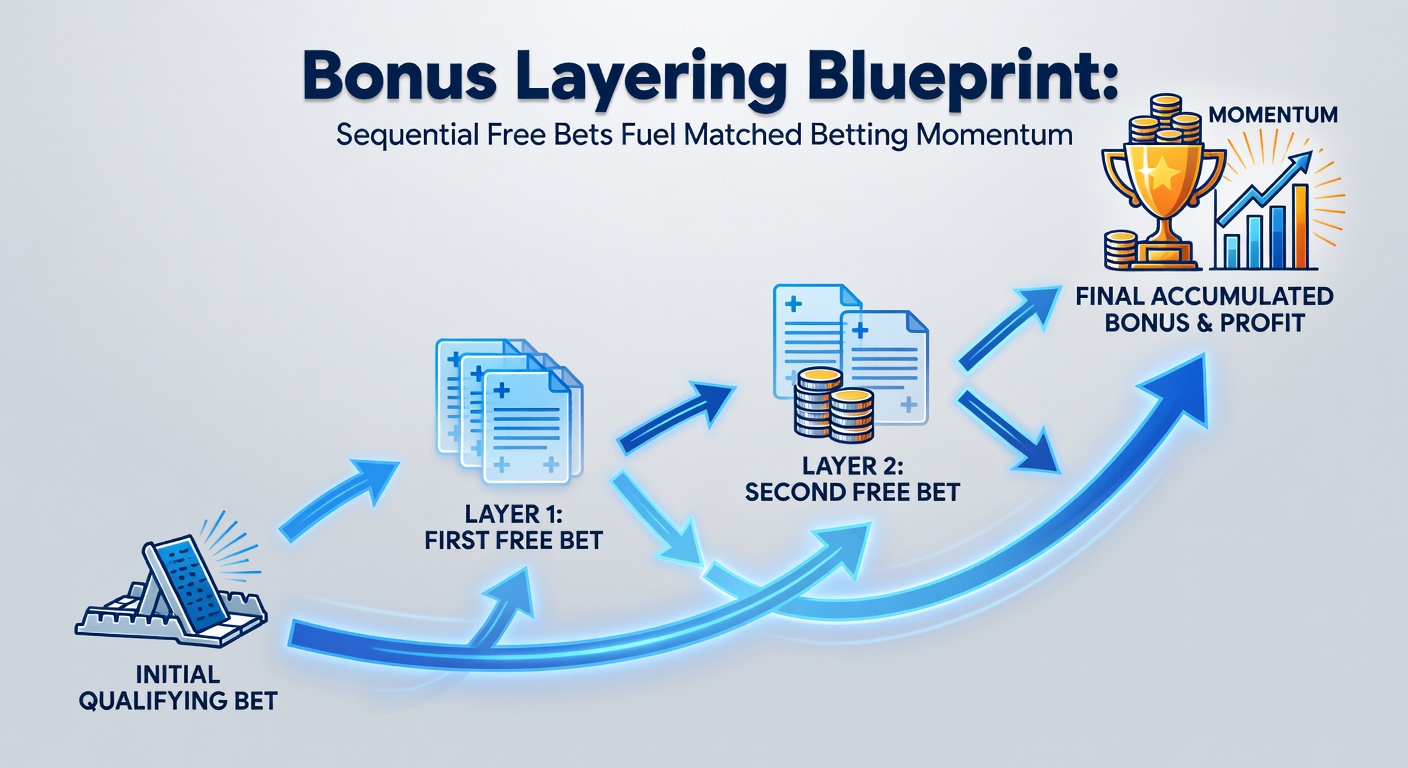
Take the example of a bettor navigating April 2026's Cheltenham aftermath, where lingering horse racing free bets chained into football accumulators; starting with a £50 welcome from one site, they extracted £35, fed it into a £40 free bet elsewhere for £28 more, then layered a £25 in-play offer, ending with £92 total profit across three bookies—all without additional cash input.
Studies from the National Council on Problem Gambling in the US highlight similar patterns in low-risk betting models, where sequential free bet use correlates with sustained activity over isolated grabs; figures reveal that layered bettors average 2.5x more annual extractions, since momentum from one promo fuels eligibility for others that demand prior activity.
And yet, flexibility shines in volatile markets; during the 2026 Masters golf surge, one documented sequence swapped tennis free bets for golf outrights, adapting as odds shifted, which preserved a 75% retention rate on layered value; people who've mastered this often rotate across 20+ bookmakers yearly, turning sporadic offers into a steady pipeline.
Tools and Timing: Optimizing Sequential Free Bets in 2026
Software trackers now dominate the landscape, scanning for sequential opportunities by algorithmically linking promo expiry dates with minimum activity thresholds; these tools, popular among matched betting communities, flag chains like a casino free bet converting to sports credit, then to a cashout booster, streamlining what used to take hours of manual scouting.
Timing proves crucial, especially as April 2026 brought a wave of mid-season reloads tied to Euro qualifiers; data shows bettors who layer within 48 hours of promo launches capture 90% of value before odds tighten, while delays erode edges due to market efficiency. That's where the rubber meets the road: aligning sequences with exchange liquidity, often peaking during live events, ensures lays execute at minimal slippage.
Observers point out hybrid layers blending sports and casino free bets, where a £10 no-loss sports match unlocks £20 casino spins, cashed out at 10% then re-layered into bets; this fusion, noted in EU industry reports, boosts overall yields by 15%, since casino conversions provide buffer for riskier sports sequences.
Navigating Challenges in Bonus Layering Momentum
While sequences build speed, gubbing—bookmaker restrictions on winning accounts—looms as a hurdle, prompting bettors to cycle aliases or delay layers across months; stats indicate 30% of heavy layerers face limits within six months, yet spacing sequences by site mitigates this, preserving access for ongoing momentum.
Exchange fees compound over layers, but rebates from high-volume qualifiers offset them, turning a potential 5% drag into net positive; those who've studied long-term data find that maintaining a £500-£1000 floating bankroll sustains 10-15 layers monthly, with April 2026's promo density hitting record highs per tracker logs.
Regulatory shifts add layers too, as jurisdictions like those monitored by Australia's ACMA enforce clearer bonus terms, inadvertently standardizing sequential paths; bettors adapt by prioritizing compliant sites, where transparency fuels reliable chaining without sudden disqualifications.
Conclusion: Sustaining the Sequential Edge
Bonus layering through sequential free bets stands as a cornerstone for matched betting's enduring appeal, transforming one-off promotions into compounding engines that propel accounts forward; as April 2026 unfolds with its blend of horse racing residuals and football frenzy, data underscores how disciplined sequences deliver consistent, low-risk gains across diverse markets.
Experts emphasize teh blueprint's scalability, from novices chaining three offers to veterans orchestrating 20-site marathons; the reality is, with tools sharpening detection and markets offering denser chains, this momentum shows no signs of slowing, provided bettors stay attuned to timing, fees, and adaptations.
Those who layer methodically often discover the true power lies in the cascade, where each free bet not only pays but primes the next, keeping the betting engine humming efficiently.